Conductors
Wire geometry: solid-core vs litz vs multi-strand
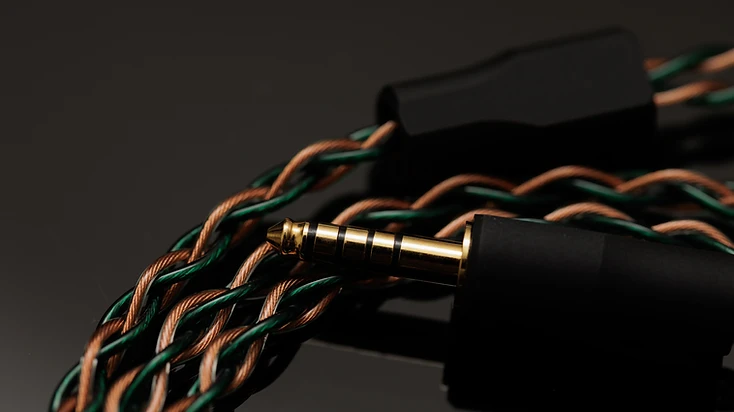
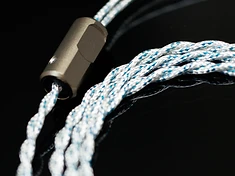
A conductor’s shape changes its sound as much as its metal. Solid-core wire offers the lowest distortion and a stable electrical picture, but can be microphonic. Litz bundles many individually insulated strands to push skin effect up and out of the audio band, smoothing highs. Multi-strand sits between — flexible, forgiving, and the basis of most of our hybrid designs. We blend solid-core 7N-HPOCC with silver- and palladium-plated strands so no single geometry is asked to do everything.
Electricals
Impedance, capacitance and resistance
An upgrade cable is an electrical component, not a passive wire. Resistance (DCR) sets how much signal is lost as heat; capacitance (pF/m) rolls off highs and can interact with a source’s output impedance; inductance shapes transient edges. For sensitive in-ears, low DCR and low capacitance keep the top end open and the background quiet. We measure every geometry and choose conductor gauges so the cable complements the driver, not the other way around.
Connectors
Connector types: 2-Pin, MMCX, Pentaconn and XLR
The termination is where most cables fail. HQ-2-Pin (0.78 mm) is robust and common to many in-ears. MMCX is compact but wears over cycles — we use a high-quality variant rated for more insertions. 4.4 mm and 2.5 mm balanced plugs double the available voltage swing on capable sources. XLR 4-pin is the studio standard for balanced drive. Choosing the right pair — termination at the earphone, plug at the source — is the single biggest compatibility decision in a build.
Shielding
AST — Advanced Shielding Technology
A shield keeps interference out of the signal. Our AST wraps a conductive braid and a foil around the conductor geometry, grounded at the source end so induced noise drains away rather than travelling the signal path. The result is a quieter background — the space between notes that our cables are known for. Shielding adds capacitance, so it is applied with restraint and only where the geometry benefits.
Materials
Conductor materials: copper, silver, palladium
Copper is the reference — warm, full, natural. Silver-plated copper adds air and speed on top without losing body. Palladium-plated strands bring a refined, less fatiguing texture to the midrange. Our tri-brid geometry places all three in deliberate proportion using Ratio Material Matching Calculation, so the tonal balance is designed, not accidental.
Tuning
Tuning: Dynamic, Reference, Studio
Tuning is how we voice a finished cable. Reference aims for neutrality — the recording, nothing more. Dynamic adds energy and punch for lively recordings and portable sources. Studio Reference is the flattest, most analytical voicing, for critical listening and mixing. Same conductors, different geometry and treatment — the tuning is the last hand on the sound.